

Quick answer
The climb is rated strenuous but non-technical: expect roughly 1,400 metres of vertical gain on unrelenting 25–35 degree slopes of ash, scree and snow. No rope work or prior mountaineering is required, though crampons and an ice axe usually are. Park entry closes at 16:00, so summit attempts start early — most parties are moving by dawn.
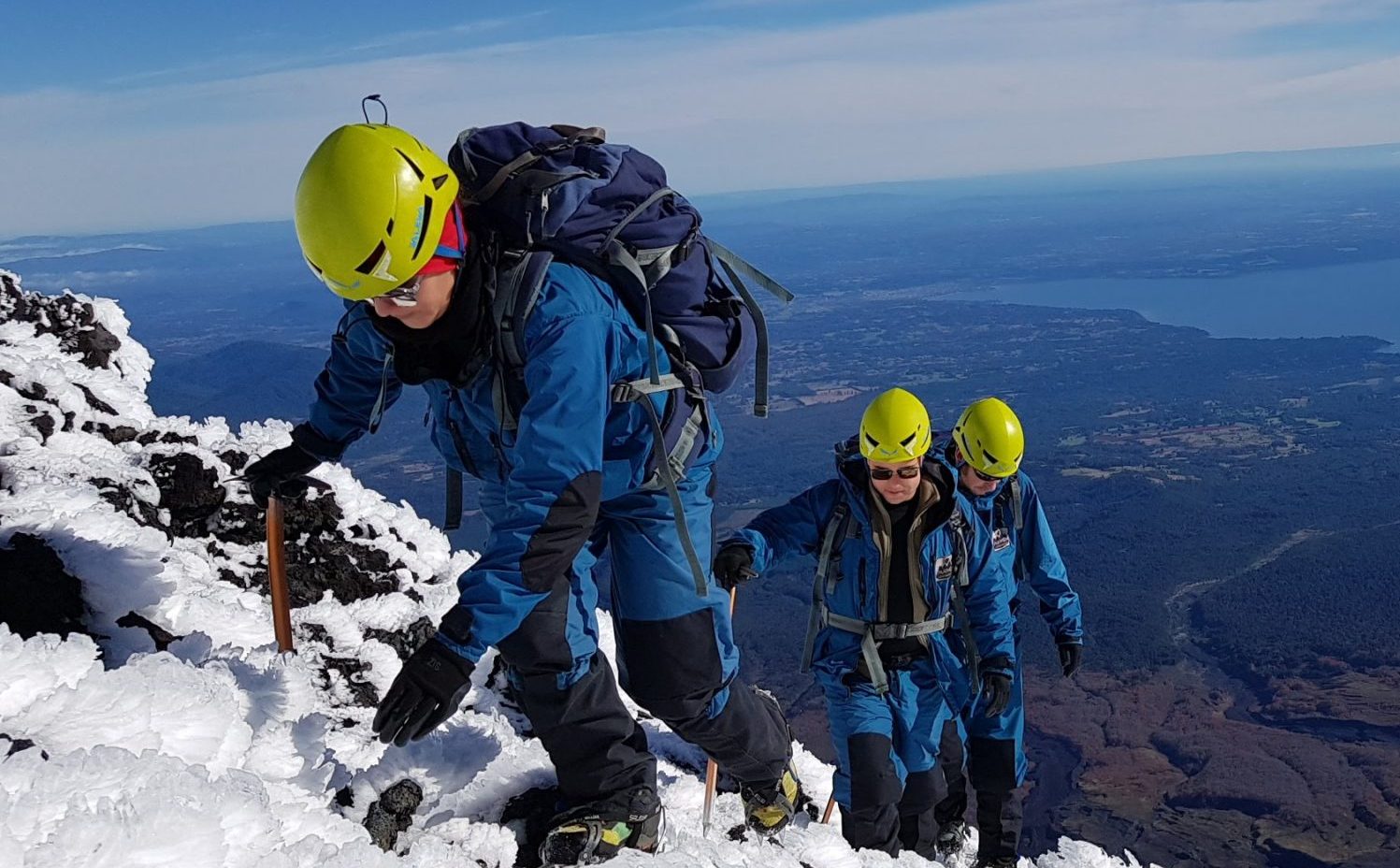
Villarrica is one of the few permanently active volcanoes on the planet that permits regular ascents to the crater rim, and on a clear day walkers reach a lip of open lava lake venting sulphur into the wind. That single fact reframes the villarrica volcano hike difficulty question. This is not a summit reached and admired at leisure; it is a mountain where the reward is measured in minutes at the top and where descent conditions, gas readings and wind decide whether anyone stands there at all. What the body faces is straightforward and relentless. From the trailhead above Pucón, the route climbs a broad flank of volcanic scree that gives underfoot like wet sand, then hardens into snowfield and glacier ice that holds through much of the year. The gradient rarely eases. There are no switchbacks generous enough to feel like rest, no plateau, no shaded stretch. Fitness matters more than skill: the ability to keep a slow, steady rhythm uphill for several hours, in thin air and full sun, is the single best predictor of who reaches the crater. Knees take the worse punishment on the way down, when tired legs meet loose ash and the slide out is fast. Guides on the Pucón volcano trek routinely turn people back not for lack of technique but for lack of pace, because the descent window is fixed and cannot be stretched. Context matters as much as conditioning. Parque Nacional Villarrica sits in La Araucanía, and CONAF, the national forestry body that administers it, controls access alongside the volcano's own alert level. Ascents are suspended outright when seismic activity or gas emissions rise, sometimes for weeks. Certified guides, harnesses, helmets and crampons are the norm rather than an upsell, and independent climbing is restricted. The dificultad del ascenso al volcán Villarrica is therefore not a fixed rating but a moving one, shaped by snowpack, wind and whatever the crater is doing that week. Anyone weighing the villarrica volcano hike difficulty against their own condition should be honest about hill-walking experience rather than gym hours. Train on gradient, not distance. Confirm current volcanic status with CONAF at conaf.cl before travelling, build spare days into a Pucón itinerary in case the mountain closes, and treat any operator that skips the fitness questions as a warning rather than a convenience.
“Fitness matters more than skill — the ability to keep a slow, steady rhythm uphill decides who reaches the crater.”
Villarrica Volcano Hike Difficulty and Time Requirements
This plan suits reasonably fit walkers with no prior mountaineering experience who are joining a guided ascent of Villarrica Volcano; expect 8 to 10 hours on the mountain from trailhead to return, plus transfer time from Pucón.
Transfer from Pucón
Guided groups leave town for the Pucón ski centre base at roughly 1,400 m, a drive of about 40 minutes on gravel road. Kit is checked and distributed before anyone starts walking.
Base to chairlift level
Either ride the ski lift or walk the first 400 vertical metres on volcanic cinder, which adds 45 to 60 minutes and a fair amount of fatigue before the real climb begins.
Ash and scree slope
Two to three hours of steady switchbacks on loose volcanic gravel, where each step slips back slightly. This is where most people find the effort harder than the gradient alone suggests.
Snowfield and crampon section
Above roughly 2,000 m the route firms into snow and ice, requiring crampons and ice axe technique. Progress slows to a guided rest step, adding another two to three hours.
Crater rim
Around 30 to 40 minutes at the 2,847 m summit rim, weather permitting. Sulphur gas often shortens the stay, so eat and drink before arriving.
Descent by sliding
The descent takes two to three hours, much of it sliding the snow slopes on a plastic sled seat, then a knee-heavy walk down the ash.
Return to Pucón
Gear is returned at the base before the drive back. Most people are back in town by late afternoon and stiff the following day.
Navigating the Villarrica Volcano Hike Difficulty
This walkthrough breaks the ascent into its distinct terrain sections so you can gauge the physical effort each one demands, from the volcanic scree at the base to the crater rim. Work through it before you commit, and match each section against your own fitness and snow experience.
Warm up on the ash slope
Start on the loose volcanic ash and scoria above the ski area, where the gradient sits at a walkable 15-20 degrees. Most people burn energy here by pushing the pace on soft ground that gives way underfoot — settle into a slow, flat-footed rhythm instead.
Move onto the snowfield
Above roughly 2,000 metres the surface turns to compacted snow and ice for the bulk of the climb, and crampons go on. The common error is fitting them loosely at the transition point; stop, sit down, and check the straps before continuing rather than adjusting mid-slope.
Hold the 30-degree traverses
The mid-mountain sections steepen to sustained 30-35 degree pitches taken as long diagonal traverses. Keep all crampon points flat against the slope and avoid edging on the ankles, which is what tires legs and causes slips here.
Pace the final headwall
The last stretch below the rim is the steepest ground of the day, on firm morning snow that softens later. Take short steps and rest standing rather than sitting, since core temperature drops fast at altitude.
Practise the descent technique
You lose the whole ascent in a fraction of the time by glissading down snow chutes on a sliding seat. Braking with the ice axe, not the heels, is the skill that separates a controlled slide from an uncontrolled one.
Assess your honest fitness
The route asks for roughly 1,400 metres of vertical gain in one continuous push with no bail-out point midway. Anyone who cannot climb stairs steadily for several hours should reconsider before booking, as guides will turn back climbers who slow the rope team.
Optimal Timing for Managing Villarrica Volcano Hike Difficulty
The summer months of December through March offer the most stable conditions for climbing, minimizing the physical exertion required to navigate ice and deep snow. During this window, consolidated snowpack typically provides more reliable footing compared to the variable conditions found in winter and shoulder seasons.
December–March
High densityTemperatures 10°C to 20°C; clear skies
The most accessible period for summiting due to lower snow levels and predictable weather patterns.
April–May
Low densityTemperatures 5°C to 15°C; increasing precipitation
Early autumn provides cooler temperatures but introduces higher risks of sudden weather shifts and fresh snowfall.
June–September
Moderate densityTemperatures -5°C to 10°C; heavy snow
Winter conditions demand advanced crampon and ice axe skills, significantly increasing the technical difficulty of the ascent.
Weekday mornings
Low density—
Starting within the best arrival window of 08:30–16:00 helps avoid midday crowds and provides more time for the descent.
Verdict: The most favorable window for managing hike difficulty is between January and February, starting promptly at 08:30 on weekdays to capitalize on stable morning weather.
Equipment to Mitigate Villarrica Volcano Hike Difficulty
Villarrica's 1,400 m of ash, scree and glacier ice rewards preparation, so work through these steps in order from a few weeks out to the morning of your climb.
-
Build uphill endurance for six weeks — Consecutive hours of steep ascent, not distance, decide who summits.
-
Train with a loaded daypack — Carrying 6-8 kg of gear changes pace and balance on scree.
-
Book a certified guide in advance — CONAF requires guided ascent, and guides supply the technical kit.
-
Confirm crampons, ice axe, helmet included — Frozen morning slopes and rockfall make all three non-negotiable.
-
Reserve gas mask and gaiters — Sulphur gas at the crater and volcanic grit demand both.
-
Layer windproof shell, fleece, gloves — Summit winds run far colder than the trailhead, even in summer.
-
Pack UV sunglasses and high-factor sunscreen — Snow glare above the treeline burns exposed skin within minutes.
-
Arrive between 08:30 and 16:00 — Early departure is required, and last entry is 16:00 sharp.
Villarrica Volcano Hike Difficulty and Operational Hours
Villarrica National Park operates on a set schedule throughout the week, remaining closed on Mondays. Climbers must align their plans with these hours to ensure safe access to the trail.
| Monday | Closed | |
|---|---|---|
| Tuesday | 08:30–17:30 | |
| Wednesday | 08:30–17:30 | |
| Thursday | 08:30–17:30 | |
| Friday | 08:30–17:30 | |
| Saturday | 08:30–17:30 | |
| Sunday | 08:30–17:30 |
Check availability
Frequently asked questions about villarrica volcano hike difficulty
Everything you need to know about villarrica volcano hike difficulty